
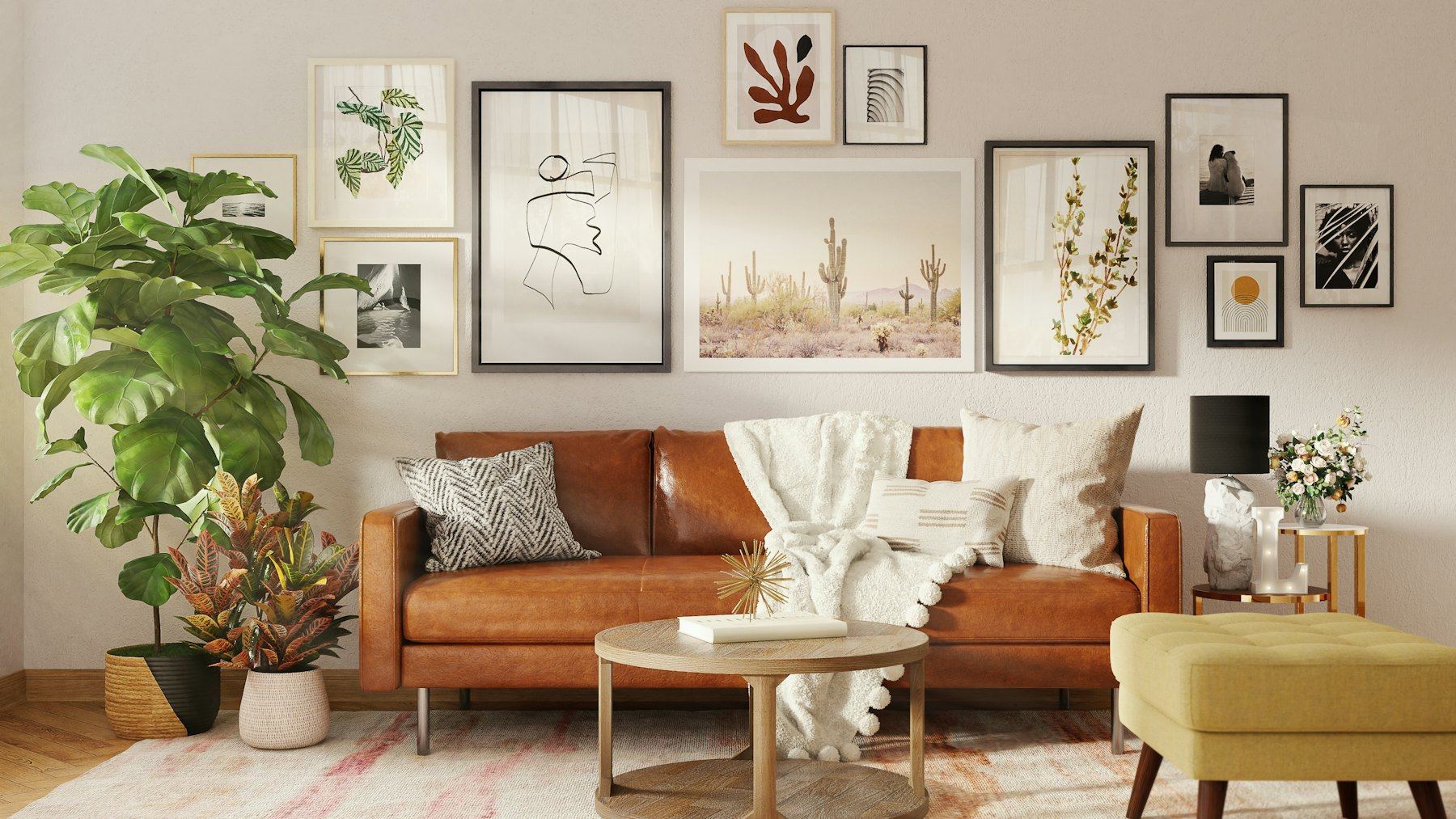
The gallery wall is one of those ideas that sounds simple until you are standing in front of a blank chimney breast with a hammer, twelve frames and a growing sense of dread. Done well, it is the most personal thing in a house: a little botanical print from a market stall, a pencil sketch from a car boot sale, your grandmother on a seaside pier. Done badly, it looks like someone emptied a picture shop onto the wall.
The good news is that the difference is almost entirely in the planning. Here is how we do it.
Start with things you love, not things that match
The best gallery walls grow out of a collection rather than a shopping trip. Before you buy a single frame, gather everything you might want to hang: postcards, children's drawings, exhibition posters, old maps, a tea towel worth framing, an embroidered sampler. Lay it all out on the floor and look for threads that connect them. It might be a colour, a subject (birds, boats, faces), or simply a feeling.
Flea markets, car boot sales and charity shops are wonderful for this. Old frames are often better made than new ones, and a slightly battered gilt frame next to a crisp black one is exactly the kind of tension that makes a wall interesting. Our guide to charity shops, car boots and antiques has some tips for spotting good frames under bad pictures.
The best gallery walls are never finished. They are a conversation you keep adding to.
Grid or salon: choose your style
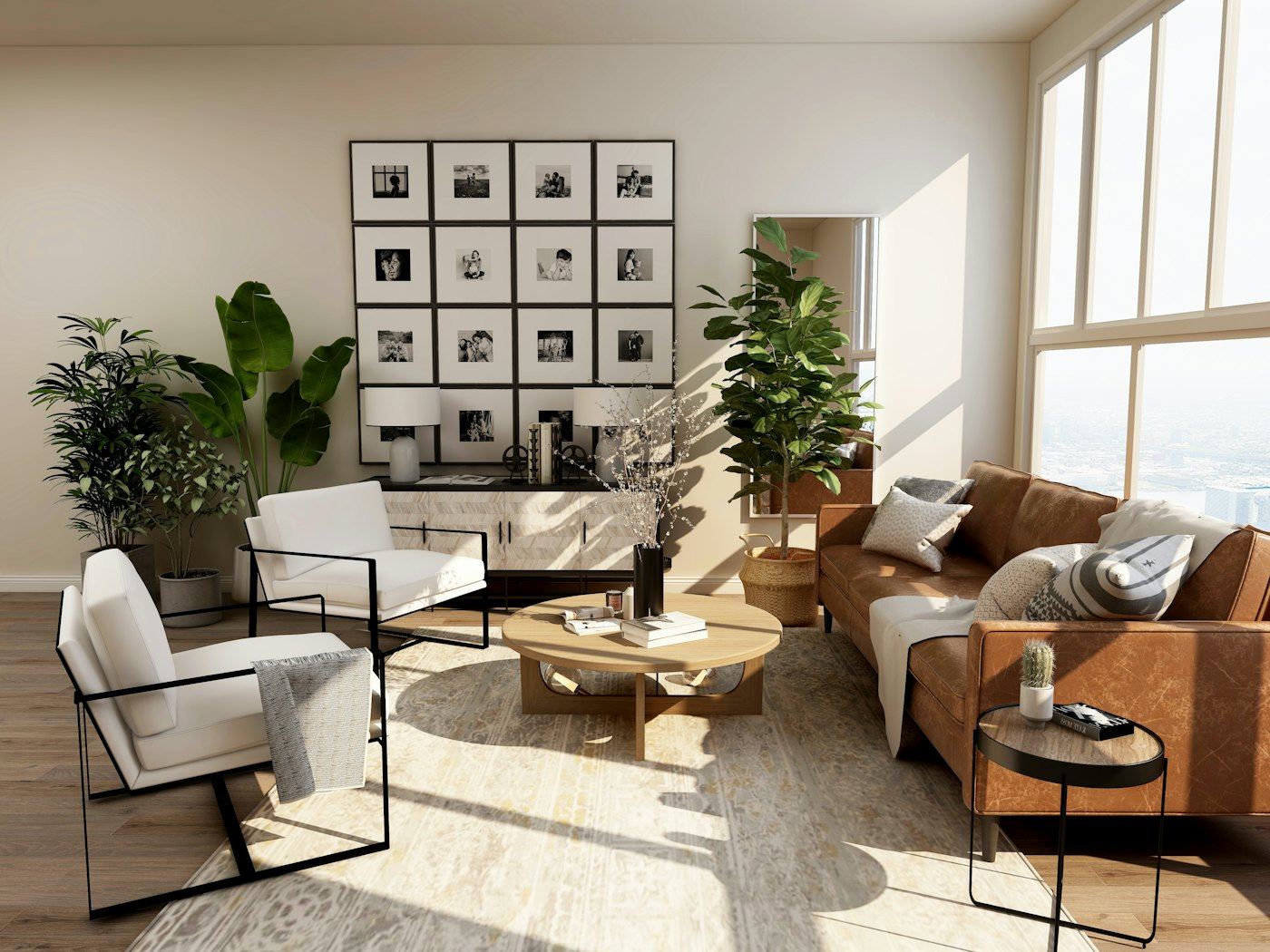
There are, broadly, two schools. A grid uses identical frames in neat rows with equal gaps. It looks calm, modern and quite architectural, and it is the best way to show a set of photographs, especially black and white. It is also unforgiving: everything must be level, so measure twice and use a spirit level every time.
The salon hang, named after the crowded exhibition walls of the Paris Salon, mixes sizes, shapes and frame styles in a looser arrangement. It suits period British rooms beautifully, especially above a sofa or up a staircase, and it is far more forgiving of the odd crooked nail. The secret is an invisible structure: keep a consistent gap between frames and anchor the arrangement with one or two larger pieces near the centre.
Plan on the floor, then on paper
Never start by putting nails in the wall. Lay the whole arrangement on the floor first, in a space roughly the size of your wall, and move things around until it feels balanced. Take a photo on your phone so you can remember it.
Then cut paper templates for each frame (brown parcel paper or old wrapping paper is ideal), mark where the hook sits on each, and stick them to the wall with low-tack decorator's tape. Live with the paper version for a day or two. You will almost certainly move something.
- Keep gaps between frames consistent, usually somewhere between 5 and 8 centimetres.
- Hang the centre of the whole group at roughly eye level, around 145 to 150 centimetres from the floor.
- Above a sofa, leave a gap of about 20 to 25 centimetres between the sofa back and the lowest frames.
- Repeat at least one frame colour or mount colour across the wall to tie things together.
- Put your largest or favourite piece slightly off-centre, not dead in the middle.
Picture rails, plaster and the renter's way
If you are lucky enough to have a picture rail, use it. It is exactly what it was designed for, and hanging from rail hooks on cord or chain means no holes in your walls at all. It suits a loose, traditional hang, and you can rearrange it on a whim. Do check the rail itself is firmly fixed before trusting anything heavy to it.
Old lath-and-plaster walls can be crumbly, so use proper picture hooks with fine hardened pins that go in at an angle, rather than a big nail that can crack the plaster. For anything heavy on modern plasterboard, use a suitable fixing and check for pipes and cables first.
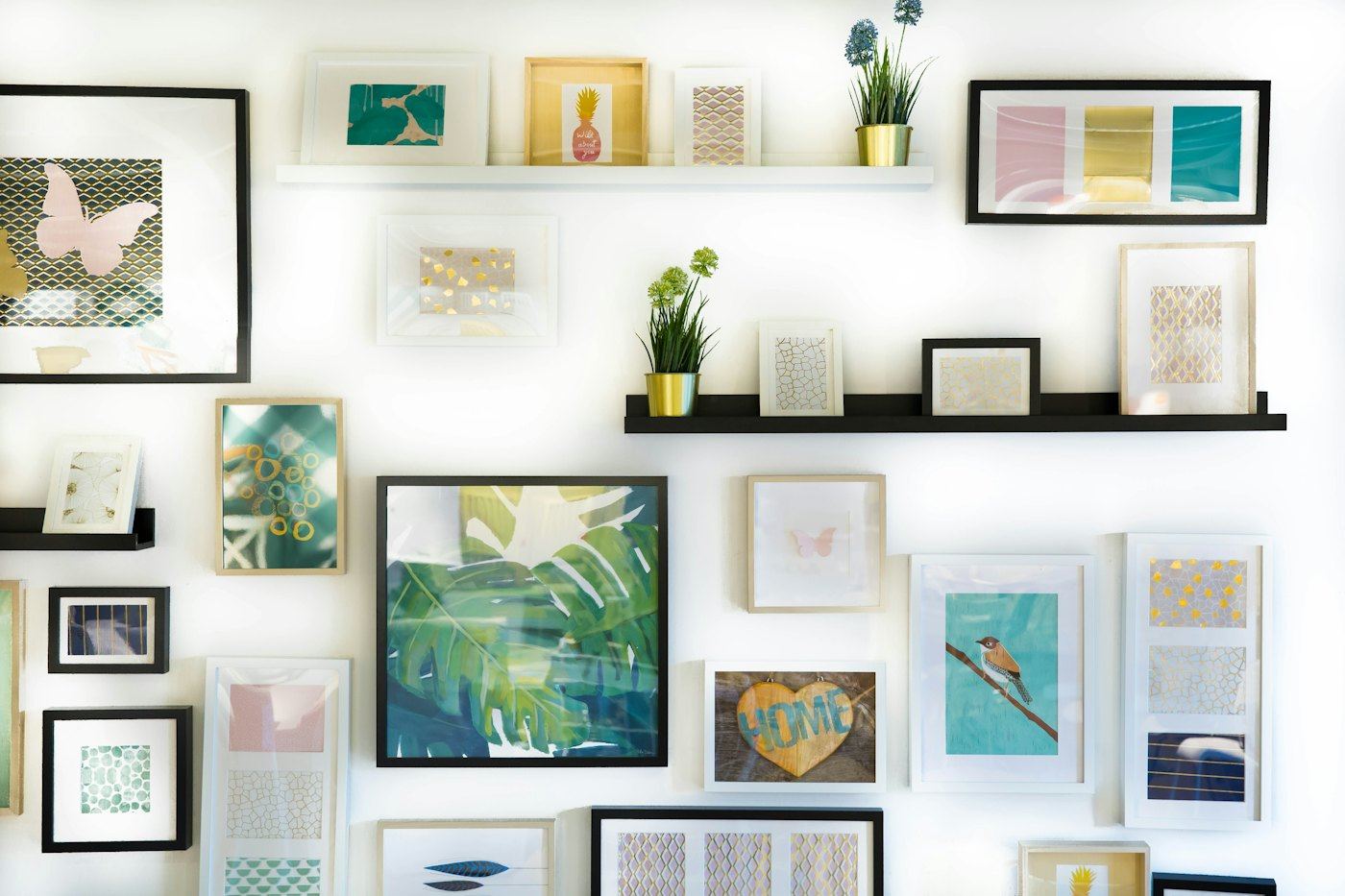
Renting? Picture ledges are the answer. Two or three fixings hold a whole shelf of frames that you can lean, layer and swap around whenever you like, and the overlapping look is lovely in its own right. Lean a larger frame behind a smaller one, add a little postcard tucked into a corner, and the ledge becomes a constantly changing display. There are more ideas in our deposit-friendly decorating guide.
Family photos without the waiting-room look
Family photographs are the hardest thing to hang well, simply because we tend to frame them in whatever came with the print. A few small changes make a big difference.
First, unify them. Black-and-white prints, or a set of matching frames with white mounts, instantly make a mixture of decades look like a collection. Second, mix them in. A single family photo among prints and drawings feels personal; thirty identical school portraits feel like a corridor. Third, choose the place. Hallways and staircases are ideal for family pictures because you pass them every day, and they are there for you rather than for guests.
Let it grow
Leave a little room at the edges. The best gallery walls evolve: a new print from a holiday, a drawing a child insists on, a frame from the next car boot. A dark painted wall makes everything look more precious, so if you are tempted to change the background too, our British paint palette has a few colours that flatter pictures. And if you are still hesitating, start with three frames above a desk. You can always add a fourth.
The brown paper template trick saved our walls. My husband wanted to just start hammering and see what happened.
We have picture rails but the hooks we found look very flimsy. Are they really strong enough for a big framed mirror?
Proper picture rail hooks are surprisingly strong, but check the rail itself is firmly fixed to the wall before trusting it with anything heavy. For a large mirror, use two hooks and two lengths of cord or chain to spread the weight.
I have to disagree slightly about the family photos. We have a whole wall of them in the hallway and it's the first thing the kids look at when they come home.
That sounds lovely, and a hallway is exactly the right place for it. Our only suggestion would be matching frames or mounts, so the faces do all the talking.