
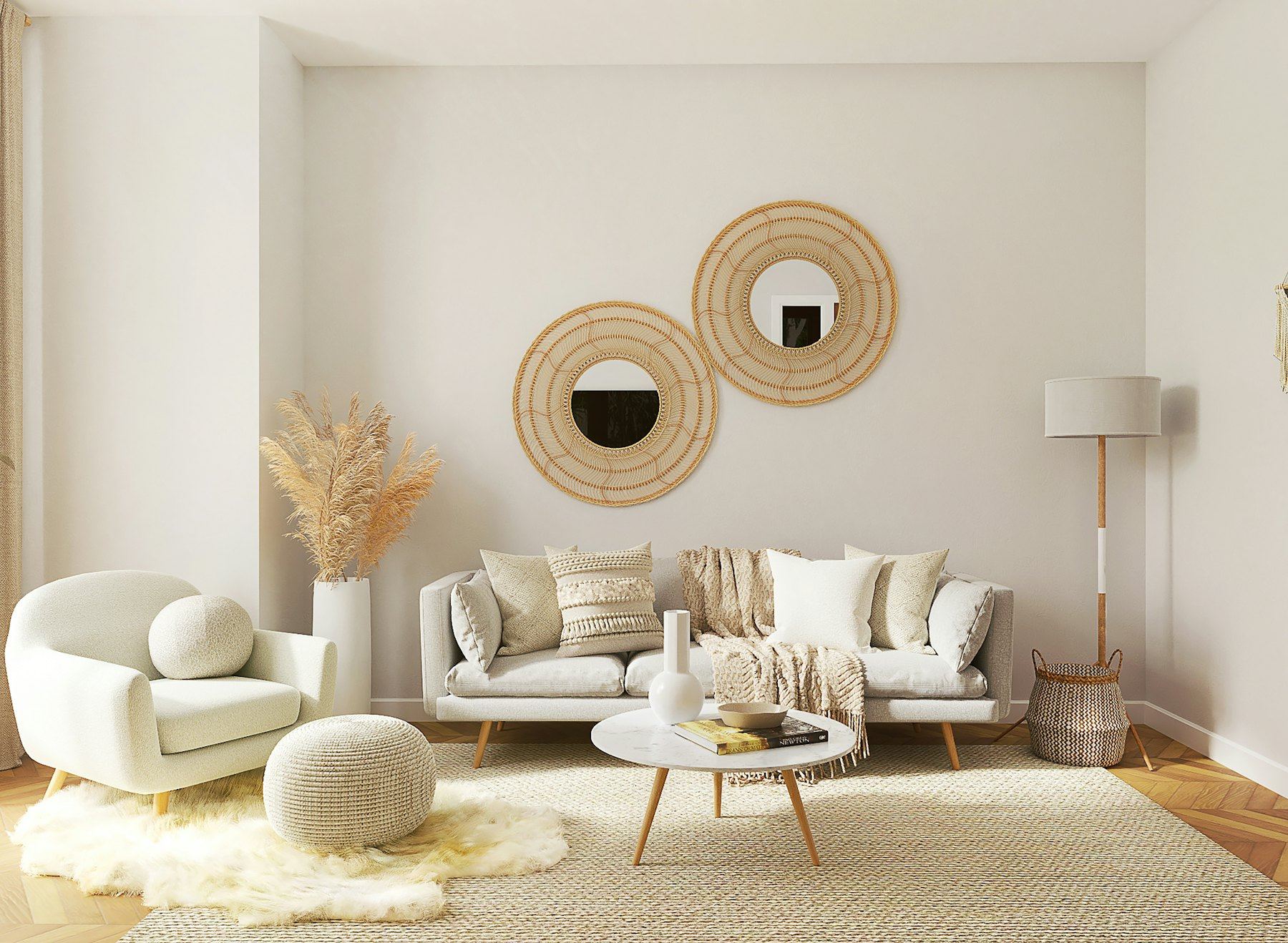
The classic English room has a reputation for gentle chaos: chintz on chintz, books on every surface, a dog asleep on a sofa that has seen three generations of the family. Minimalism, meanwhile, asks us to own very little and to show even less. At first glance, they could not be further apart. In practice, the most appealing British homes of recent years sit somewhere in between, combining the warmth and history of English tradition with the clarity and calm of a pared-back approach.
What English tradition gives us
It is easy to caricature the English country house look, but at its heart it has some admirable qualities. It values comfort over show, and age over novelty. It likes a good armchair, a proper fire, a lamp to read by and something interesting to look at. It is relaxed about mixing periods and does not mind a little wear. Perhaps most importantly, it treats a home as a place to live rather than a place to impress.
These are exactly the qualities that can make strict minimalism feel cold. A room with no history, no softness and nowhere comfortable to sit is restful to look at in a photograph and miserable on a damp Tuesday in February.
What minimalism gives us
Minimalism, for its part, is very good at the things English tradition tends to neglect. It values space and light. It asks whether each object is really necessary. It favours a limited palette, so that rooms feel coherent and calm. It encourages good storage, so that surfaces can stay clear. And it reminds us that one beautiful thing, given room to breathe, often says more than ten things jostling for attention.
The two traditions actually share a common ancestor in the Arts and Crafts movement, which railed against Victorian clutter long before anyone used the word minimalism.
Have nothing in your houses that you do not know to be useful, or believe to be beautiful.
William Morris
Where the two meet
Symmetry and proportion
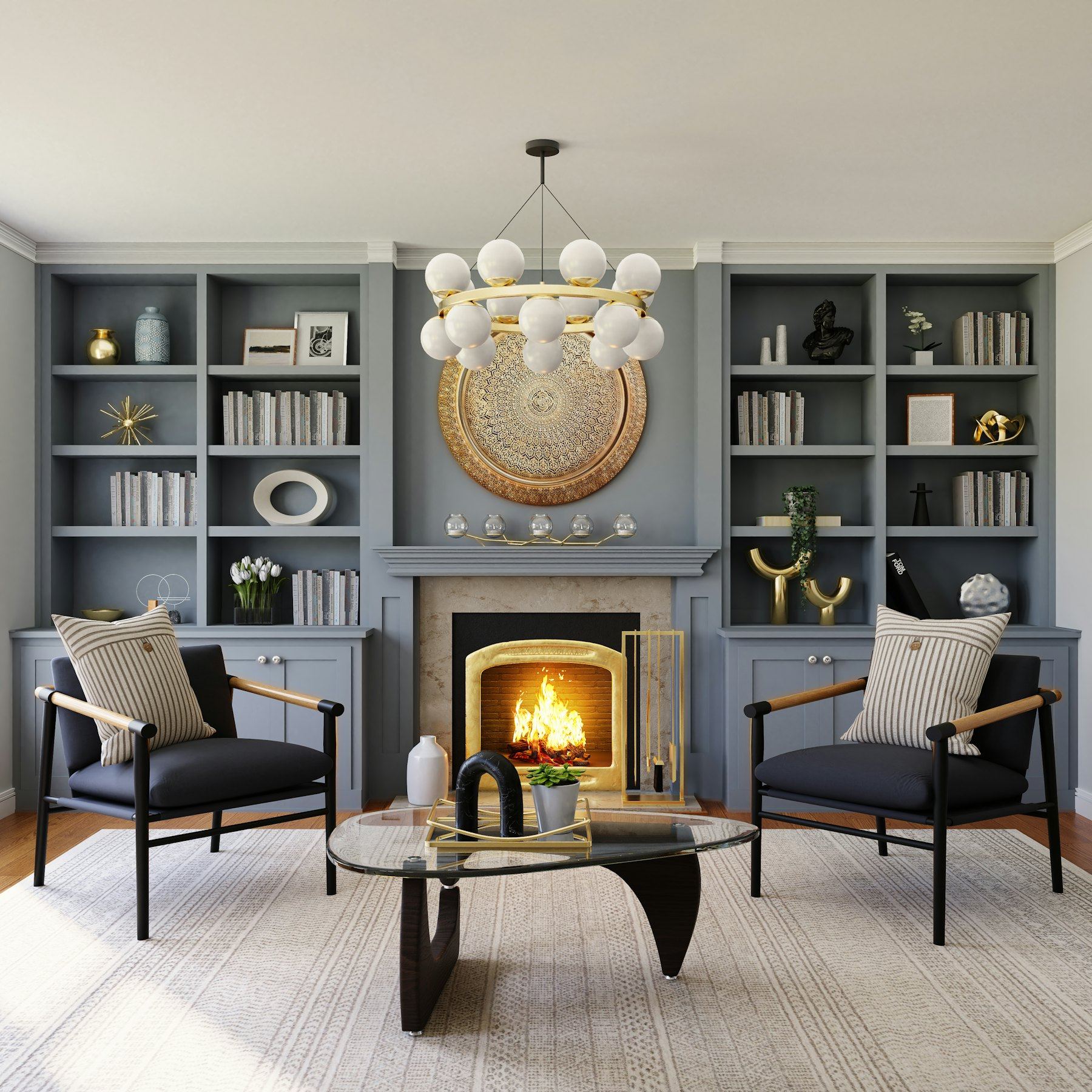
Classical English rooms are built on symmetry: a fireplace in the centre, matching alcoves, a pair of lamps, a pair of chairs. Minimalism loves order too, so this is the easiest meeting point. Hang two identical mirrors side by side above a sofa, place matching lamps on either end of a console, or arrange a pair of armchairs facing each other across a low table. The repetition creates calm without needing more objects.
A restrained palette
Choose a narrow family of colours and stick to it. Warm whites, stone, oatmeal, putty and soft taupe are classic choices, and they flatter both old plaster and new. Add depth with a single darker note, such as a charcoal, a muted green or a deep brown, used on a piece of furniture or a single wall rather than everywhere.
Texture as decoration
If you remove pattern and clutter, texture becomes the thing that keeps a room interesting. Boucle, linen, wool, rattan, paper, oak and stone all bring a quiet richness. A neutral room with lots of texture feels layered and warm; the same room with smooth, synthetic surfaces feels like a hotel corridor.
Choosing the old pieces
A modern classic room needs at least a few things with history. The trick is to choose them carefully and let them stand alone. One antique chest of drawers in a clean white room looks deliberate and lovely; five antiques crowded together look like an auction preview. Good candidates include:
- A Georgian or Victorian chest of drawers, used as a sideboard or bedside table.
- A pair of simple country chairs, perhaps painted.
- An old gilt or wooden mirror above a fireplace.
- A worn Persian or kilim rug, which adds colour and age without fuss.
- A collection of old books, but only on shelves designed for them.
Our guides to finding antiques and car boot treasure and to wood, brass and ceramics are useful starting points.
Editing without emptying
The biggest misunderstanding about minimalism is that it means owning nothing. In a modern classic home, it really means deciding what goes on show. The goal is not an empty room but an edited one, where every object has earned its place. Books, papers, chargers, remote controls and the general debris of family life still exist; they simply live behind cupboard doors, in drawers or in baskets. Built-in storage either side of a chimney breast, a deep sideboard or a well-planned hallway cupboard does a lot of the work.
- Clear every surface, then put back only what you love or use daily.
- Group small objects on a tray so they read as one thing.
- Give every room at least one comfortable seat and one good lamp.
- Choose fewer, larger pictures rather than many small ones.
- Bring in something living, whether a plant, a branch or a jug of grasses.
The result is a home that feels calm when you walk in, but still welcomes you to kick off your shoes and settle down with a cup of tea. If you want to take the softer side further, our piece on British hygge, tea and throws is the natural next step.
The rule about adding something old if the room feels bare is excellent. I tried it with my grandmother's writing box on an empty console and it changed the whole hallway.
That is exactly the idea. A single piece with a story does more than any amount of new accessories. Thank you for sharing.