

Every October, the same ritual begins in our house. The heating comes on, the washing moves indoors, the kettle goes on rather more often, and by the first proper frost the bedroom windows are streaming every morning like a cold glass of lemonade. Condensation is so much a part of British autumn that we barely notice it until something smells musty or a grey shadow appears in the corner of the ceiling. The good news is that most of it can be managed with habits rather than builders.
Condensation, rising damp or penetrating damp?
"Damp" is a word that covers several quite different problems, and the fix depends on which one you have. Here they are in plain terms.
Condensation
Warm air holds more moisture than cold air. When warm, moist air from cooking, bathing, breathing and drying clothes meets a cold surface, such as a single-glazed sash, an uninsulated external wall or the back of a wardrobe, it cools and drops its water. You see it as droplets on glass, damp patches in corners and on north-facing walls, and black mould spotting on sealant, window reveals and behind furniture. It is usually worst in winter and in rooms that are cooler or less ventilated. This is by far the most common kind of damp in British homes.
Penetrating damp
This is water getting in from outside: a cracked or blocked gutter, slipped roof tiles, failed pointing, a leaking downpipe or a window sill that no longer throws rain clear. It tends to appear as a localised patch that grows or darkens after heavy rain, sometimes at ceiling level and sometimes on a single stretch of wall.
Rising damp
Moisture travelling up through walls from the ground, typically leaving a tide mark up to about a metre high. It is genuinely less common than it is often said to be, and plenty of "rising damp" turns out to be condensation, a bridged damp-proof course, or soil and paving piled up against the outside wall. Older solid-walled houses have their own needs too, so it is worth getting an independent, experienced opinion before agreeing to any expensive treatment.
If you suspect penetrating or rising damp, that is a job for a qualified professional, or for your landlord if you rent. What follows is mostly about condensation, which is the one you can do the most about yourself.
Know your numbers: a hygrometer
A small digital hygrometer is one of the most useful and least glamorous things you can buy for a home. It measures relative humidity, and once you can see it, you start to understand your house. Broadly, somewhere around 40 to 60 per cent is comfortable for people and less inviting for mould and dust mites. If you see a bedroom sitting well above that for long stretches, especially on cold mornings, you know where to focus.
Move it round the house for a week or two. You may find the bathroom is fine because the fan works, while the back bedroom, with its cold outside wall and a rack of drying jeans, is the real culprit.
A dry house is not a cold house. It is a house where the air is allowed to move.
Everyday habits that make the difference
None of these are dramatic, but together they reduce the amount of moisture you put into the air and help the rest of it escape.
- Lids on pans. It saves energy as well as steam. Use the cooker hood if you have one, ideally one that vents outside, and keep the kitchen door closed while you cook.
- Run the extractor fan during and for a good while after a shower or bath. If your fan sounds like it is working but a tissue held up to it barely flutters, the filter or duct may need cleaning or the fan may need replacing.
- Dry washing outside whenever the weather allows, even for a few hours. When it has to be indoors, choose one room, shut the door, open the window a little, and keep it away from the coldest walls. A dehumidifier in that room helps enormously.
- Vent the tumble dryer properly to outside if it is a vented model, and empty a condenser dryer's water tank regularly.
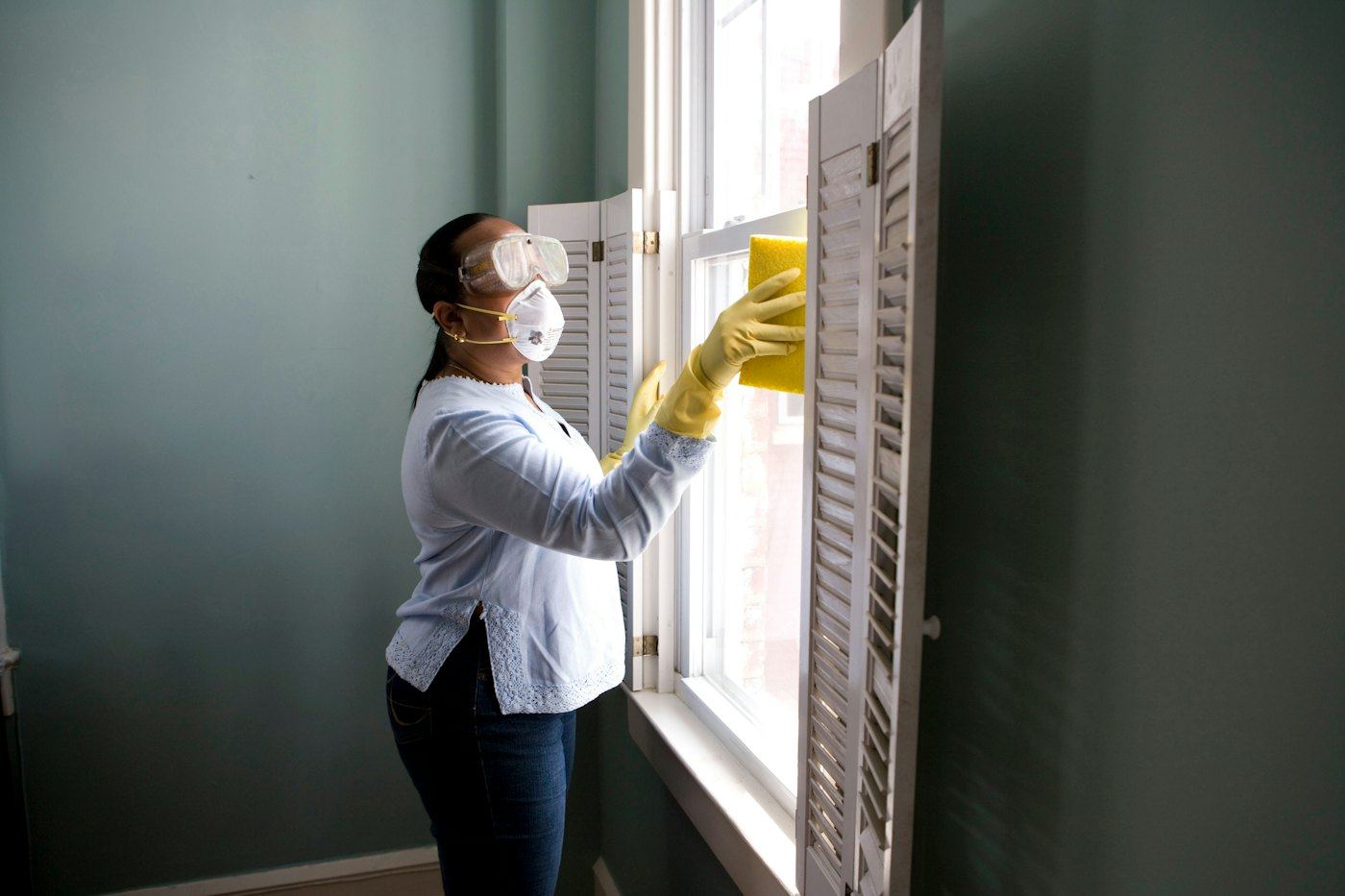
- Wipe windows first thing. A squeegee or absorbent cloth on the glass and sills each morning stops water soaking into timber and paint and feeding mould.
- Open windows briefly after cooking or bathing, and for a few minutes in the morning in bedrooms, where we breathe out a surprising amount of moisture overnight.
Furniture, wardrobes and cold corners
Air needs to circulate to keep surfaces from becoming cold and damp. Wardrobes and bookcases pushed tight against an external wall create a pocket of still, cool air behind them that mould adores. Leave a gap of a few centimetres between large furniture and outside walls, and if you can, put the wardrobe on an internal wall instead.
Inside cupboards, do not cram things in. Overstuffed wardrobes on cold walls are the classic source of that musty smell on winter coats. Leave the doors ajar now and then, and never put damp clothes away.
Keeping the house at a reasonably steady temperature also helps, as cold surfaces are where condensation forms. That does not mean heating empty rooms to tropical levels; the Energy Saving Trust has sensible, independent advice on heating and ventilating homes efficiently.
When to call in help
Small spots of mould on silicone or a window reveal can usually be cleaned off with a suitable mould remover, following the instructions and wearing gloves, with the window open. But some things should not be dealt with alone:
- Black mould that keeps coming back over a large area, or appears on several walls.
- Damp patches that grow after rain, or a tide mark low on the walls.
- Rotting skirting, crumbling plaster or a persistent musty smell under floors.
- Anyone in the household with breathing problems, allergies or other health concerns that seem linked to the damp. Speak to your GP as well.
If you rent, report damp and mould to your landlord or letting agent in writing, with dated photos, and keep copies. If it is not dealt with, your local council can advise on your options. Homeowners should look for an independent surveyor or a builder experienced in their type of house.
Once the air is under control, the cosy part is easy. Our guide to a cosy home in November picks up where this leaves off.



Bought a hygrometer after reading this and the spare room where I dry the washing was sitting far higher than anywhere else. Moved the airer into the bathroom with the fan on and it has already improved.
That is exactly the sort of detective work a hygrometer is for. Do keep an eye on the bathroom now too, and give the fan a good run.
Our surveyor said almost the same thing about rising damp in our 1890s terrace: the real issue was the garden soil sitting above the inside floor level. Digging it back did more than any injection would have.
Slight disagreement on opening bedroom windows in winter. Ours are single glazed and it feels like throwing heat away. Is a dehumidifier not enough on its own?
A dehumidifier helps a lot, and on bitter days a short airing of a few minutes is plenty rather than leaving windows open. The aim is to swap moist air for drier air quickly, so the walls and furniture do not lose much heat.